Roof rats are not uniformly distributed across Winston-Salem. Drive through Ardmore or Southside and you are unlikely to find a roof rat. Drive through Reynolda Park, Buena Vista, Mount Tabor, Forest Hills, or Old Town and you will find properties where attic inspections are positive at a rate that exceeds any other urban area in the Piedmont Triad. The explanation is geographic and ecological, not random.
Reynolda Gardens as Ground Zero
The R.J. Reynolds estate established what became Reynolda Gardens in the 1910s with a deliberate planting program of mature hardwood species — oaks, hickories, tulip poplars, and maples that were intended to create a naturalistic landscape on the scale of an English country park. Those trees are now 100-plus years old. The largest specimens reach 60 to 80 feet. The canopy coverage from Reynolda Gardens extends eastward through adjacent residential lots that have inherited the same tree species at the same scale.
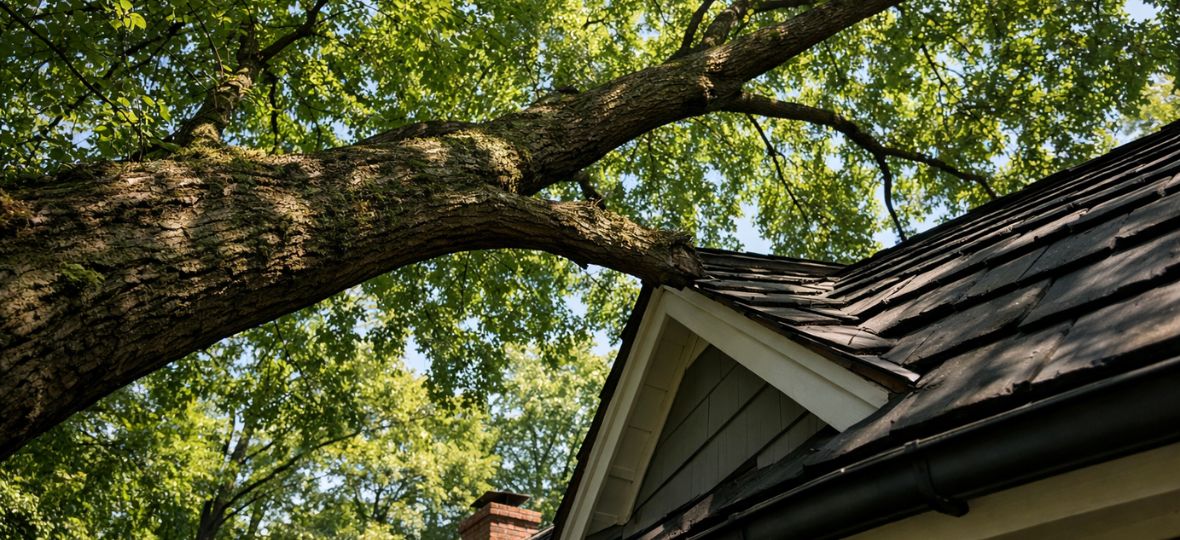
Roof rats are arboreal. They travel along limbs, nest in tree cavities, and access buildings by jumping from overhanging branches to roof surfaces. A mature hardwood with limbs overhanging within 6 feet of any roofline provides roof rats with a highway that bypasses ground-level exclusion entirely. The Reynolda canopy is not just any tree cover — it is one of the largest intact urban hardwood canopies in the Piedmont, maintained for a century and extended through the adjacent residential lots that have been adding their own trees since the 1920s.
The 1920s-1960s Housing Stock Contribution
Mature canopy alone does not create a roof rat problem. The canopy provides access — the housing stock provides entry. Reynolda Park, Buena Vista, Mount Tabor, and Forest Hills were developed primarily between 1920 and 1960. Homes from that era were built with construction characteristics that, after 60 to 100 years, create reliable roof rat entry points.
Wood-frame soffits that have pulled away from the fascia. Gable-end vents with galvanized screening that has corroded and torn. Dormer-to-roof transitions that were never sealed against rodent access. Plumbing stack penetrations that have had their lead or rubber collars deteriorate. These are not construction defects — they are the normal condition of houses approaching or past the century mark. They are also the standard inventory of roof rat entry points. The combination of overhead canopy access and open building penetrations is what makes the west-Winston canopy belt the highest roof rat density zone in Forsyth County.
Why Standard Rodent Control Fails in the Canopy Belt
A common failure mode for roof rat work in Reynolda Park and Buena Vista is treating the attic infestation without addressing the tree access. Snap traps in the attic catch the animals currently inside. A successful two-to-three-week trapping program removes the active population. Two months later the homeowner has a new infestation through the same soffit gap, because a roof rat colony 40 feet up in an adjacent oak has been using that gap as a regular entry point for years.
The durable solution requires both elements: removing the active population through attic trapping and eliminating the overhead access pathway through roofline exclusion plus tree trimming. Soffit sealing, gable-vent retrofitting, and dormer-transition closure prevent entry after the active population is removed. Tree trimming to maintain 6-foot clearance from all roofline surfaces eliminates the aerial highway that makes the sealed property a target in the first place.
The Neighborhoods Affected
The canopy belt runs roughly west to east from Reynolda Gardens through the following neighborhoods, each with the housing stock characteristics that make roof rat exclusion necessary rather than optional:
- Reynolda Park: Highest inspection-positive rate in Winston-Salem. Direct adjacency to Reynolda Gardens canopy. 1930s–1960s housing.
- Buena Vista: Dense canopy from Country Club Road through Buena Vista Road. 1920s–1950s wood-frame and brick construction.
- Mount Tabor: Large lots with mature oak coverage along Mount Tabor Church Road. 1950s–1970s construction.
- Forest Hills: Southern extension of the canopy belt toward Jonestown Road. 1940s–1960s construction with complex rooflines on larger properties.
- Old Town: Western Reynolda Road corridor. Mix of canopy-belt roof rat pressure and older construction mouse pressure from the West Salem boundary.
- West Highlands: Eastern edge of the canopy belt thinning toward Lewisville Road. Lower density but genuine roof rat pressure on canopy-adjacent lots.
The 6-foot rule: Any tree limb overhanging within 6 feet of any roofline surface — soffit, fascia, gable vent, or roofing material — provides viable roof rat access. This accounts for a roof rat's jump distance from a limb to a roof surface. A canopy-belt property with 20 overhanging limbs within this threshold has 20 potential access points that exclusion work alone cannot address. Tree trimming is not an optional add-on to a canopy-belt exclusion program; it is a prerequisite for durable results.
What a Complete Canopy-Belt Roof Rat Program Looks Like
The sequence for a Buena Vista or Reynolda Park roof rat job: free attic inspection to confirm species and entry points; written quote covering the full scope; attic snap-trap deployment to achieve knockdown (3 to 5 weeks in an established colony); simultaneous or immediate roofline exclusion covering soffit voids, gable vents, dormer transitions, and all penetrations; tree-access assessment with written trimming recommendations; and a follow-up inspection to verify knockdown and seal integrity. Attic cleanup and insulation assessment are added to the scope when colonization has been active long enough to saturate the insulation layer.
Questions About Your Winston-Salem Property?
Free inspection. Written quote. Open 24/7 across Forsyth County.