Free Inspection ยท Same-Day Available

Crawl Space Rodent Sealing in Winston-Salem, NC

Crawl space rodent sealing is species-specific exclusion applied to the below-floor zone of homes built on crawl-space foundations โ€” the standard construction type across most of Winston-Salem's pre-1970s housing stock. Crawl spaces create a protected, dark, temperature-stable environment that Norway rats, house mice, and occasionally roof rats use as harborage and travel corridors. Sealing the crawl space eliminates that harborage while closing the entry points the rodents use to move between the crawl space and the living areas above.

๐Ÿ“ž Call (844) 635-0403All 28 Services
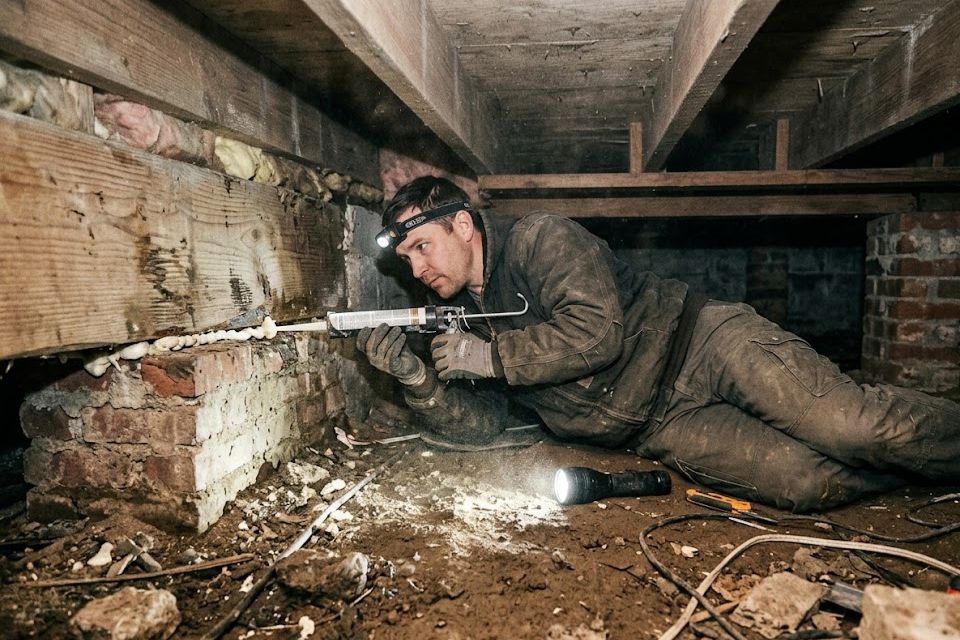
Technician sealing a utility penetration inside a Forsyth County crawl space
Why Winston-Salem Crawl Spaces Are High-Risk

Why Winston-Salem Crawl Spaces Are High-Risk

Four characteristics of Winston-Salem's crawl-space housing stock drive persistent rodent pressure in these spaces.

Construction Era

Pre-1970s Foundation Vents

Foundation vents installed before current building standards were often sized at 8ร—16 inches with no rodent-proof screening, or with galvanized screening that has since corroded and torn. Each unscreened or damaged vent is a full access point for Norway rats and mice. Replacing or retrofitting these vents with 1/4-inch stainless-steel mesh is the primary crawl-space exclusion task on most Forsyth County residential properties.

Soil Contact

Norway Rat Burrow Adjacency

Crawl spaces with soil-contact floors (no vapor barrier, or deteriorated vapor barrier) allow Norway rats to burrow directly up from soil into the crawl space without going through any above-grade entry point. Soil-contact crawl spaces in Old Salem and West Salem โ€” directly above the city's oldest sewer infrastructure โ€” face the highest Norway rat pressure of any property type in Forsyth County.

Utility Penetrations

Plumbing & HVAC Gaps

Water supply lines, drain lines, HVAC flex-duct runs, and electrical conduit all penetrate the crawl-space floor plate and sub-floor framing. The sleeves around these penetrations are almost never rodent-tight in pre-1970s construction โ€” gaps of 1/2โ€“2 inches around active plumbing lines are routine, providing mouse and rat access from crawl space into wall voids and kitchen/bathroom areas above.

Access Panels

Exterior Access Door Gaps

Exterior crawl-space access panels are frequently installed without rodent-proof perimeter seals. The panel itself may be solid, but the frame gap between panel and foundation rim can run 1/4โ€“3/4 inch on settling older construction. This single point is often the primary entry for both Norway rats and house mice in properties where the vent screens are otherwise intact.

What Crawl Space Rodent Sealing Includes

What Crawl Space Rodent Sealing Includes

Step 1

Crawl Space Inspection

Full interior crawl-space walk: dropping distribution, runway evidence, nesting material, active burrow locations, vapor-barrier condition, and a systematic inventory of every vent, penetration, and access-panel gap. Written findings with photograph documentation. Free.

Step 2

Vent Retrofitting

Existing vents fitted with 1/4-inch stainless-steel mesh inserts, or replaced with pre-screened foundation vents where the existing frames are too deteriorated for insert installation. Painted or powder-coated to match foundation finish where visible.

Step 3

Penetration Sealing

All plumbing, HVAC, and electrical penetrations through the crawl-space floor plate sealed with metal collar plus stainless-steel mesh plus foam backer. The combination closes the gap and resists gnawing through the metal layer.

Step 4

Access Panel & Perimeter

Crawl-space access panel perimeter sealed with metal threshold or rubber gasket to eliminate the frame gap. Panel itself inspected and replaced if deteriorated. Brick-pier mortar gaps repaired where Norway rat access is confirmed.

Free Inspection โ€” Winston-Salem & Forsyth County

Written quote. No contracts. Open 24/7.

๐Ÿ“ž Call (844) 635-0403
Common Questions

FAQs

What gap size do mice need to enter a home?

A house mouse can compress its body through any gap 1/4 inch or larger โ€” roughly the diameter of a standard pencil or a US dime. This is the standard that mouse proofing must meet: every exterior gap above 1/4 inch must be closed with gnaw-resistant materials for the exclusion to be effective.

How many entry points does a typical Winston-Salem home have?

A pre-1970s home in Ardmore or the West End typically has 15โ€“35 closeable mouse-scale entry points on a thorough inspection: kitchen and bathroom plumbing penetrations, crawl-space vent screens, HVAC and dryer-vent surrounds, door sweeps, garage door threshold, and foundation-grade gaps. Newer homes typically have 6โ€“15. All are mapped before the quote is issued.

Do I need mouse proofing if my home is new construction?

Newer construction has fewer entry points but is not immune. HVAC flex-duct sleeve penetrations, garage door thresholds without rodent-resistant seals, and dryer-vent louvers are standard mouse entry points in homes built after 2000. A pre-purchase or pre-occupancy inspection identifies which apply to a specific property.

What does mouse proofing cost in Winston-Salem?

Kitchen and laundry penetration sealing for a typical single-family home runs $300โ€“$600. Whole-home mouse proofing โ€” all confirmed and probable entry points โ€” runs $600โ€“$1,400 for pre-1970s construction with complex crawl-space and foundation geometry. Inspection is free; written quote before any work begins.

Related Services

Often Combined

๐Ÿ“ž Call (844) 635-0403 โ€” Open Now