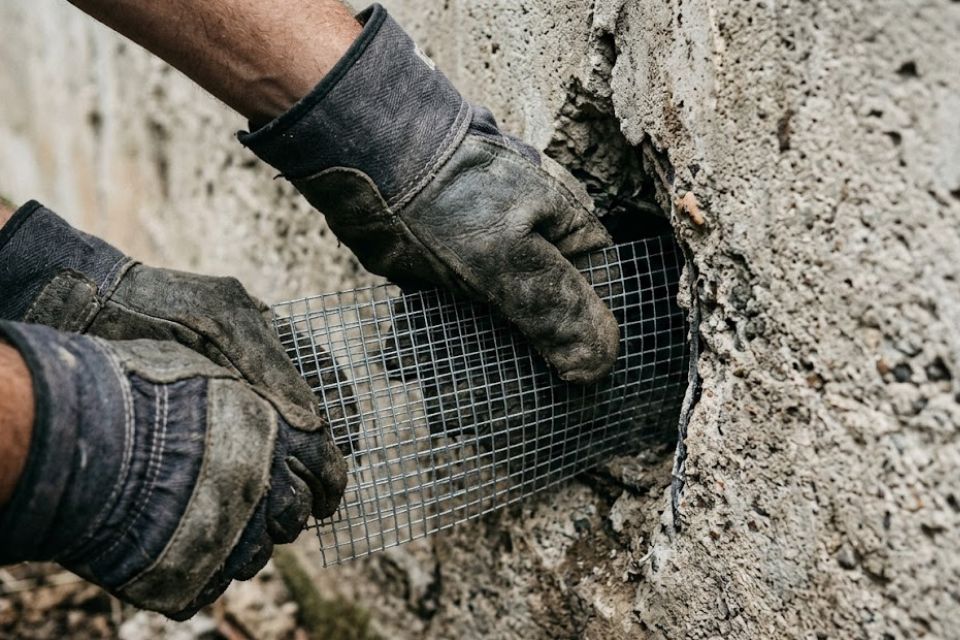
Rodent exclusion service is the physical sealing of every entry point a rat or mouse can use to access a building. It is the only rodent-control method that permanently resolves an infestation rather than managing an ongoing population. Trapping and baiting reduce the animals currently inside; exclusion closes the gaps that allow new animals to replace them. In Winston-Salem's pre-1970s housing stock, exclusion is rarely a one-gap job — a thorough inspection typically identifies 12–30 entry points on an older residential property.
Why Exclusion Is the Long-Term Fix — Not a Sales Line
The pest-control industry's business model is built on recurring visits. An exclusion-first model — closing the gaps and ending the cycle — is the opposite of that. We offer exclusion because it resolves the problem for the homeowner, which is more important to us than creating a long-term service dependency.
Recurring Trap Program
Population Management
Catches rodents as they enter. Never runs out of work because entry points remain open. Requires indefinite repeat visits. Appropriate when exclusion isn't feasible (rental properties between tenants, properties with immediate infestation only) but never the preferred long-term solution.
Exclusion Program
Source Elimination
Closes every entry point to the tolerance specific to the species. New rodents cannot enter. The existing population is removed by the accompanying trap program. One-time job with a follow-up verification visit. No recurring visits required unless new entry points develop years later.
Full Program
Both Combined
Treatment phase removes the active population. Exclusion phase closes all entry points simultaneously. Verification visit confirms both knockdown and seal integrity. Written prevention report identifies remaining risk factors (overhanging trees, landscape harborage) that aren't part of the exclusion scope.
What Exclusion Covers
Entry Points We Seal in Winston-Salem Homes
The entry-point map from the inspection drives the exclusion scope. Common categories across Winston-Salem's residential stock:
Foundation Grade
Below-Grade Entry Points
Brick-pier mortar joints, crawl-space vent screens, utility sleeve gaps (water, gas, electrical), sump-pump discharge penetrations, and foundation crack voids wider than 1/2 inch. Norway rat exclusion territory. Materials: lime mortar, hardware cloth, metal flashing, hydraulic cement.
Wall & Floor
Above-Grade Wall Entry Points
Kitchen supply-line penetrations, bathroom drain escutcheons, HVAC flex-duct returns, dryer-vent louvers, electrical conduit entries, and floor-plate gaps at exterior wall bases. Mouse and rat territory depending on gap size. Materials: stainless steel mesh, paintable siliconized caulk, metal escutcheon plates.
Worn door sweeps, garage door threshold seals, pet-door flaps without rodent-resistant backing, and window-frame settling gaps at sill level. Mouse primary, rat secondary. Materials: stainless-steel door sweeps, threshold seals, foam backer with mesh.
Free Exclusion Inspection — Winston-Salem & Forsyth County
Written quote. No contracts. Same-day available for active infestations.
What is rodent exclusion and how is it different from pest control?
Rodent exclusion is the physical closure of building entry points — gaps, cracks, penetrations — to prevent rodents from entering. It differs from standard pest control in that it eliminates the access problem rather than treating the population that enters through it. Exclusion is a one-time construction-scope job; pest control is ongoing population management. Most complete rodent programs combine both.
How many entry points does a typical Winston-Salem home have?
A pre-1970s home in Ardmore, the West End, or Old Salem typically has 12–30 identifiable entry points on a thorough inspection — ranging from major foundation gaps to minor plumbing-sleeve voids. Newer homes typically have 4–10. The inspection maps all of them before we quote the exclusion scope.
What materials do you use for rodent exclusion?
The material matches the application and the construction era. Common materials: 1/2-inch stainless-steel hardware cloth for vent and crawl-space applications; painted aluminum or steel flashing for soffit and roofline; lime-compatible mortar for historic brick-pier joints; expanding foam with rodent-deterrent additive (capsaicin compound) for interior plumbing penetrations; heavy-gauge door sweeps for threshold gaps. We use Portland cement mortar only where the building fabric is not historic.
Does exclusion come with a warranty?
We guarantee the specific entry points we seal for 12 months — meaning if a sealed point fails and rodents re-enter through that specific gap, we reseal at no charge. We don't warranty against new entry points that develop after the job is complete (roof damage, settling that opens new gaps, landscaping changes that create new access) — those would need a follow-up inspection.