Rat nest removal is the location, extraction, and disposal of active or abandoned rodent nesting sites — the dense accumulations of insulation, shredded paper, fabric, and organic material that rats and mice build in attic corners, crawl-space beam bays, and wall cavities. Nesting material is saturated with urine and harbors the same pathogens as droppings; it cannot simply be left in place after treatment. Abandoned nests also retain pheromone scent markers that attract new rodents to the same location.
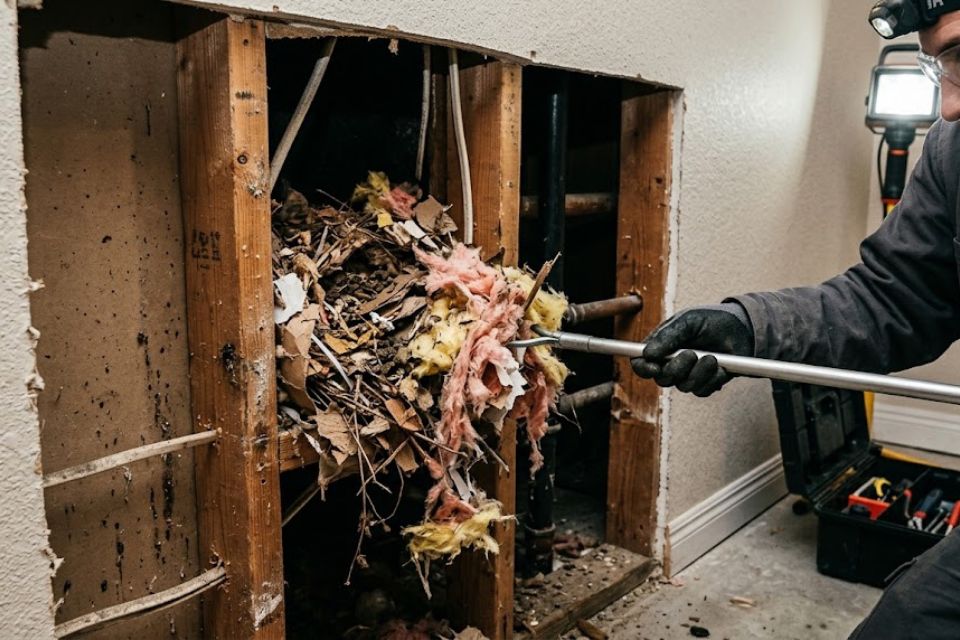
Abandoned nests continue to attract new rodents through scent marking. Rats leave urine trails and gland secretions on nesting material; these markers remain active for months and function as a homing signal for any rat that explores the area. Leaving an intact abandoned nest after exclusion is complete significantly increases the probability of re-colonization through any new entry point that develops.
Nest location via attic or crawl-space walk, or wall-cavity investigation for confirmed interior nesting. Extraction of all nesting material including the contaminated insulation immediately surrounding the nest. Bagging and disposal. HEPA-vacuum cleanup of the extraction area. EPA-registered disinfectant spray of all surfaces the nest contacted. Written report documenting location, size, and any structural observations found at the nest site.
Nests in wall cavities are the most difficult extraction scenario — the nest has to be located by odor triangulation and wall-surface inspection before any access is cut. We open the minimum necessary, extract the material, disinfect the cavity, and patch the access. We do not open walls speculatively or cut multiple access points before the location is confirmed.
Written quote. Open 24/7. Same-day available for active situations.
Wall-cavity nest location uses odor triangulation (the sweet-musty smell of a nest concentrates near the cavity), thermal imaging where the equipment adds value, and careful tap-testing of the wall surface to identify the void location. We confirm the position before any access is cut and open only what is necessary to extract the nest.
Yes. Abandoned nesting material retains scent markers that attract new rodents, and carries the same pathogen load as fresh droppings. Leaving old nesting material in place is a re-infestation risk factor and a persistent contamination source.
Attic nest removal for one to three nests in accessible insulation runs $200–$500, not including insulation replacement if the surrounding material is too contaminated to leave in place. Crawl-space nest removal runs $200–$450. Wall-cavity extraction including access opening, patch, and disinfection runs $300–$600 per access point. Free inspection; written quote before work begins.