Why Winston-Salem Has a Mouse Problem
The Pre-1970s Housing Belt and the 1/4-Inch Rule
House mice are the most widespread rodent in Winston-Salem — present in every neighborhood, active every month of the year, and capable of producing populations of thirty or more from a single breeding pair within one season. The reason they concentrate in Ardmore, Holly Avenue, Washington Park, Boston Thurmond, and the West End is simple: construction era.
Homes built before 1970 were framed, plumbed, and drywalled to tolerances that would not pass modern code. Around kitchen supply lines, bathroom drain penetrations, HVAC flex-duct returns, and crawl-space vents, gaps of 1/4 inch to 3/4 inch are routine on these properties. A house mouse needs only a 1/4-inch gap — roughly the diameter of a pencil — to enter a wall void. Eighty years of Piedmont clay shifting widens those gaps seasonally.
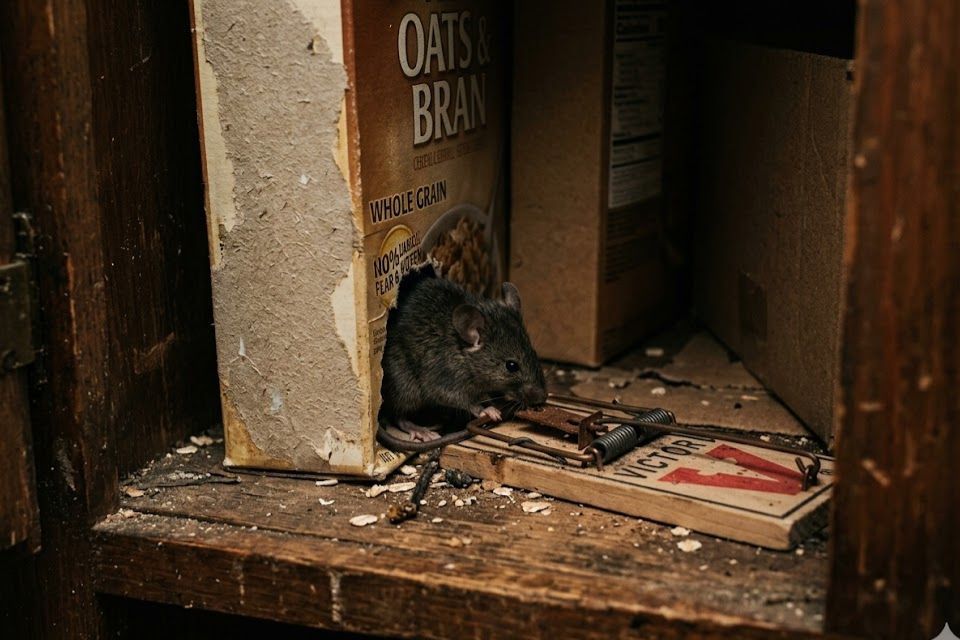
Hardware-store snap traps catch individual mice but don't reduce the population when entry points remain open. New mice continue replacing the ones trapped, and the homeowner cycles through traps indefinitely. Professional mice control combines a trap program that achieves population knockdown with physical sealing that makes the space inhospitable to recolonization. Both steps are required for a durable resolution.
Signs you have house mice rather than rats: rice-grain sized droppings (1/4 inch) near food sources, gnaw marks on cardboard and soft plastics, rub marks along wall-base runways, and scratching sounds in wall voids — most audible at night when mice are most active.