Free Inspection ยท Same-Day Available

Mouse Proofing & Sealing Entry Points in Winston-Salem, NC

Mouse proofing is the precision exclusion work that closes every gap a house mouse can exploit โ€” any opening at or above 1/4 inch. It is the most labor-intensive exclusion scope in residential rodent control because the tolerance is roughly half that required for rat exclusion, and the gaps are often concealed inside cabinet bases, behind appliances, and beneath floor plates where routine inspection misses them.

๐Ÿ“ž Call (844) 635-0403All 28 Services
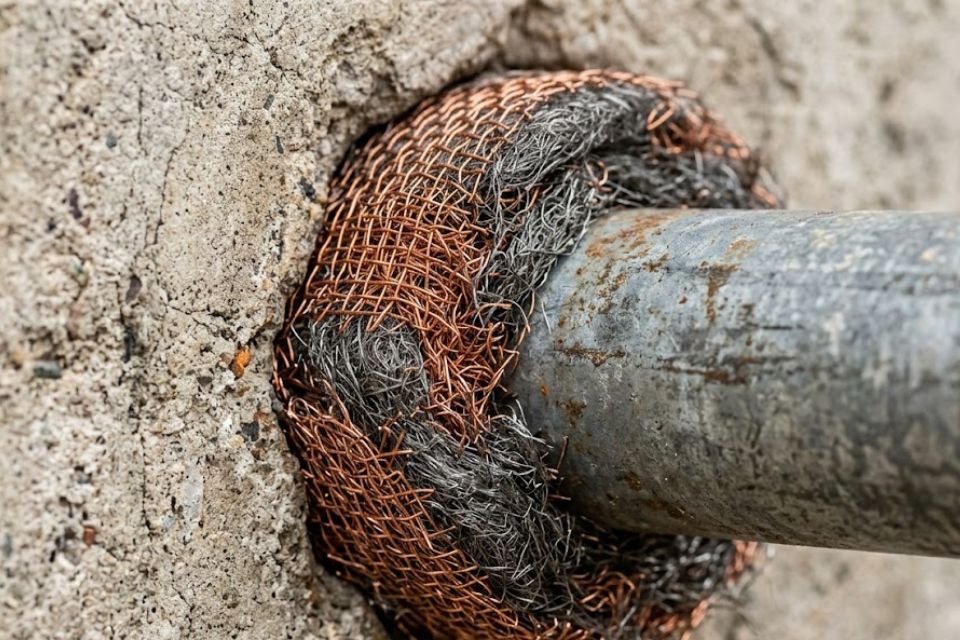
Mouse proofing โ€” sealing sub-1/4-inch entry points in a Winston-Salem home
The 1/4-Inch Standard โ€” Why Mouse Proofing Requires Precision

The 1/4-Inch Standard โ€” Why Mouse Proofing Requires Precision

Mouse exclusion is different from rat exclusion in one critical dimension: the gap standard. A rat needs a 1/2-inch opening. A mouse needs only 1/4 inch โ€” roughly the diameter of a standard pencil. That 1/4-inch threshold is the reason mouse proofing jobs take longer, cost more per linear foot, and require a more systematic inspection approach than rat exclusion.

In Winston-Salem's pre-1970s housing stock, the density of sub-1/4-inch-closeable gaps on a typical property is high. A single kitchen base cabinet typically has 3โ€“5 plumbing penetrations. A 1920s bungalow crawl space typically has 8โ€“12 foundation vent openings, multiple utility sleeves, and an access panel with a perimeter gap. A pre-1940 door frame may have 1/4-inch settling gaps at both threshold and head jamb. The inspection maps every one before the quote is issued.

Kitchen

Supply Line Penetrations

Kitchen supply lines (water, gas) pass through the cabinet-base floor plate in gaps that are almost always larger than 1/4 inch at original installation and widen with use. These are the most common mouse entry points in Winston-Salem homes โ€” and the most frequently missed because they're hidden behind under-sink items.

Utility Spaces

HVAC & Dryer Penetrations

HVAC flex-duct returns, dryer-vent louvers, and furnace-line penetrations are standard mouse entry points in both older and newer construction. The sleeve around a dryer vent is typically 4โ€“5 inches in diameter; the duct itself is 4 inches โ€” leaving a ring gap of up to 1/2 inch around the full circumference.

Foundation

Crawl Space & Vent Gaps

Original crawl-space foundation vents in pre-1970s Winston-Salem construction were installed without rodent-proof screening in many cases, or with screen mesh that has since corroded or torn. Each vent opening without functional 1/4-inch mesh is a full mouse-access point. A typical Ardmore crawl space has 6โ€“10 vents.

Doors & Thresholds

Worn Sweeps & Frame Gaps

Door sweeps on exterior doors wear to gaps that exceed 1/4 inch within 5โ€“7 years of installation. Settling gaps at head jambs on pre-1940 wood-frame doors can reach 3/8โ€“1/2 inch. Garage doors without rodent-resistant threshold seals are complete open doors to mice. All are identifiable and sealable on the inspection walk.

Mouse Proofing Materials for Winston-Salem Homes

Mouse Proofing Materials for Winston-Salem Homes

Material selection depends on the gap location, construction era, and gap size. The combination we use most often in Forsyth County residential work:

Primary Material

Stainless Steel Mesh

1/4-inch stainless-steel hardware cloth is gnaw-resistant, corrosion-resistant, and the correct mesh size for mouse exclusion. Used at crawl-space vents, utility sleeve surrounds, and structural gaps where a rigid insert is appropriate. Powder-coated or plain depending on visibility requirement.

Pipe Surrounds

Paintable Siliconized Caulk + Mesh Insert

Plumbing penetrations in cabinet bases are sealed with stainless-steel escutcheon plates plus paintable siliconized caulk for any residual gap. The combination creates a gnaw-resistant, paintable, renter/guest-invisible seal. Standard for kitchen and bathroom supply-line work.

Door & Threshold

Heavy-Gauge Stainless Steel Sweep

Door sweeps replaced with heavy-gauge stainless-steel bristle or solid-neoprene models rated to close gaps to 1/8 inch. Threshold seals at garage doors upgraded to rodent-resistant rubber or aluminum-frame neoprene products. Standard hardware-store sweeps are not adequate for mouse proofing.

Foam Supplement

Capsaicin-Additive Expanding Foam

Expanding foam with rodent-deterrent capsaicin compound used as a backer behind mesh inserts โ€” not as a standalone seal. Foam alone is not gnaw-resistant; mice will chew through standard polyurethane foam. Used in combination with mesh, it fills voids behind the primary seal and adds deterrent effect.

Free Inspection โ€” Winston-Salem & Forsyth County

Written quote. No contracts. Open 24/7.

๐Ÿ“ž Call (844) 635-0403
Common Questions

FAQs

What gap size do mice need to enter a home?

A house mouse can compress its body through any gap 1/4 inch or larger โ€” roughly the diameter of a standard pencil or a US dime. This is the standard that mouse proofing must meet: every exterior gap above 1/4 inch must be closed with gnaw-resistant materials for the exclusion to be effective.

How many entry points does a typical Winston-Salem home have?

A pre-1970s home in Ardmore or the West End typically has 15โ€“35 closeable mouse-scale entry points on a thorough inspection: kitchen and bathroom plumbing penetrations, crawl-space vent screens, HVAC and dryer-vent surrounds, door sweeps, garage door threshold, and foundation-grade gaps. Newer homes typically have 6โ€“15. All are mapped before the quote is issued.

Do I need mouse proofing if my home is new construction?

Newer construction has fewer entry points but is not immune. HVAC flex-duct sleeve penetrations, garage door thresholds without rodent-resistant seals, and dryer-vent louvers are standard mouse entry points in homes built after 2000. A pre-purchase or pre-occupancy inspection identifies which apply to a specific property.

What does mouse proofing cost in Winston-Salem?

Kitchen and laundry penetration sealing for a typical single-family home runs $300โ€“$600. Whole-home mouse proofing โ€” all confirmed and probable entry points โ€” runs $600โ€“$1,400 for pre-1970s construction with complex crawl-space and foundation geometry. Inspection is free; written quote before any work begins.

Related Services

Often Combined

๐Ÿ“ž Call (844) 635-0403 โ€” Open Now