Rodent droppings cleanup is the professional removal and disinfection of rodent fecal contamination — the work that follows a successful trap program to eliminate health risk and odor from the spaces where rodents were active. House mouse and rat droppings carry hantavirus, leptospira, and salmonella; dried droppings disturbed without proper PPE become airborne and inhalable. Professional cleanup uses HEPA-rated collection and hospital-grade disinfectant rather than a broom and standard household cleaner.
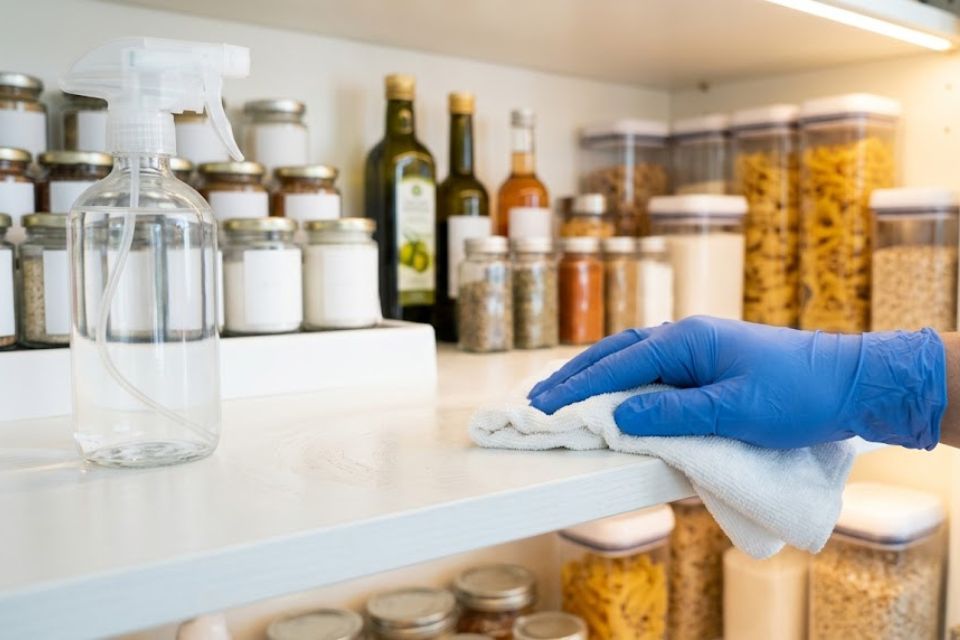
The treatment removes the rodents. The cleanup removes the health risk. These are separate steps and both matter.
Attic insulation saturated with urine and droppings from a roof rat colony is the most extensive cleanup scenario in Winston-Salem. Blown insulation acts as a sponge — urine disperses widely through the batt material, making spot-cleaning ineffective. Full attic cleanup involves HEPA-vacuum collection of droppings, HEPA-rated disinfection spray of all exposed framing and sheathing, and bagging and removal of contaminated insulation where replacement is warranted.
Crawl-space droppings from Norway rat or mouse activity concentrate along the floor-plate beam runs and near the foundation-vent areas used as travel corridors. Cleanup in this zone is physically demanding — low clearance, soil-contact floors, and often a deteriorated vapor barrier that has trapped contaminated material beneath it. PPE-grade approach is mandatory in enclosed low-clearance spaces.
Droppings under kitchen sinks, inside pantry cabinets, in wall-base cavities, and along appliance runways are the most common interior cleanup scope. These areas require HEPA-vacuum removal plus surface disinfection with EPA-registered hospital-grade disinfectant on all non-porous surfaces the rodents contacted.
Written quote. Open 24/7. Same-day available for active situations.
The CDC recommends against sweeping or vacuuming dry droppings without proper PPE — disturbed droppings become airborne and can carry hantavirus. The professional approach uses an N100 respirator, nitrile gloves, disposable coveralls, HEPA-rated vacuum, and EPA-registered hospital-grade disinfectant. If the contamination is limited to a small area and you have correct PPE, DIY cleanup is possible. For attic or crawl-space contamination of any scale, professional cleanup is the right call.
The pathogens of primary concern in North Carolina: hantavirus (from deer mice — rare in Winston-Salem but present in the region), leptospirosis (from rat urine — more common), salmonellosis (from any rodent fecal contamination of food-contact surfaces), and lymphocytic choriomeningitis (LCMV) from house mice. Risk is highest in enclosed, poorly ventilated spaces — attics and crawl spaces — where dried material accumulates over time.
Yes. Rodent droppings remain infectious long after the animals that produced them are gone. Contamination in attic insulation continues to degrade air quality through the HVAC system if it draws from the attic return. The treatment removes the animals; cleanup removes the health risk.
Kitchen and cabinet cleanup for a contained interior infestation runs $150–$400. Crawl-space cleanup runs $300–$700 depending on access difficulty and contamination extent. Attic cleanup without insulation removal runs $400–$900. Jobs that include insulation removal are quoted separately.