The optimal time to rodent-proof a Winston-Salem home is mid-August through late September — after the summer heat makes attic work more comfortable, and before the September-October window when roof rats begin actively seeking attic harborage and mouse populations start probing exterior gaps in response to cooling temperatures. A home that completes the following inspection and sealing checklist before October 1 is significantly better positioned for the fall-winter season than one that reacts to the first evidence in November.
The 14-Point Fall Inspection Checklist
Exterior Foundation and Crawl Space (Items 1–5)
- 1. Foundation vent screens: Walk the full crawl-space perimeter. Check every foundation vent for missing, corroded, or torn screening. Any opening larger than 1/4 inch is a mouse entry; anything larger than 1/2 inch is a rat entry. Retrofit with 1/4-inch stainless-steel mesh inserts where screening is compromised.
- 2. Crawl-space access panel: Check the frame gap between the access panel and the foundation rim. A 1/4-inch gap around the full perimeter of a standard 24x24-inch access panel is a mouse-accessible opening. Seal with foam backer plus mesh or a rubber gasket frame seal.
- 3. Utility sleeves at foundation grade: Find where water, gas, and electrical service enter the foundation. The sleeve is typically 4 to 6 inches in diameter; the pipe or conduit is smaller. The annular gap between sleeve and pipe is a standard entry point. Seal with metal collar plus stainless-steel mesh.
- 4. Foundation mortar condition (masonry construction): On brick-pier or masonry block foundations, look for mortar joints where the mortar has recessed more than 1/4 inch from the brick face or has crumbled. These are Norway rat entry points. Repoint with appropriate mortar — lime mortar for pre-1920s brick, Portland cement for modern block.
- 5. Exterior burrow evidence: Walk the full building perimeter looking for 3- to 4-inch diameter holes in the soil adjacent to the foundation. Norway rat burrows. Active burrows have fresh-disturbed soil at the entrance; abandoned burrows have collapsed or collapsed openings. Active burrows warrant a call.
Kitchen and Utility Spaces (Items 6–9)
- 6. Kitchen supply-line penetrations: Open the base cabinet doors under the kitchen sink and check the floor plate around both supply lines and the drain. Gaps larger than 1/4 inch need stainless-steel escutcheon plate plus siliconized caulk.
- 7. Dishwasher and refrigerator gaps: Pull the refrigerator out if possible. Check the floor plate behind it for gaps around the water supply and electrical. Check the dishwasher supply and drain penetrations under the adjacent cabinet.
- 8. HVAC flex-duct return penetration: Find where the HVAC return-air duct penetrates the interior wall. The sleeve gap around the duct at the wall plate is a standard mouse entry that most homeowners miss. Seal with foam backer plus mesh, or an HVAC-appropriate collar seal.
- 9. Dryer-vent louver: Check the exterior dryer-vent louver for condition. The louver flap should close fully when the dryer is not running. A bent or broken louver flap is a permanent open entry. Replace with a rodent-resistant louver with a spring-loaded damper.
Doors and Windows (Items 10–11)
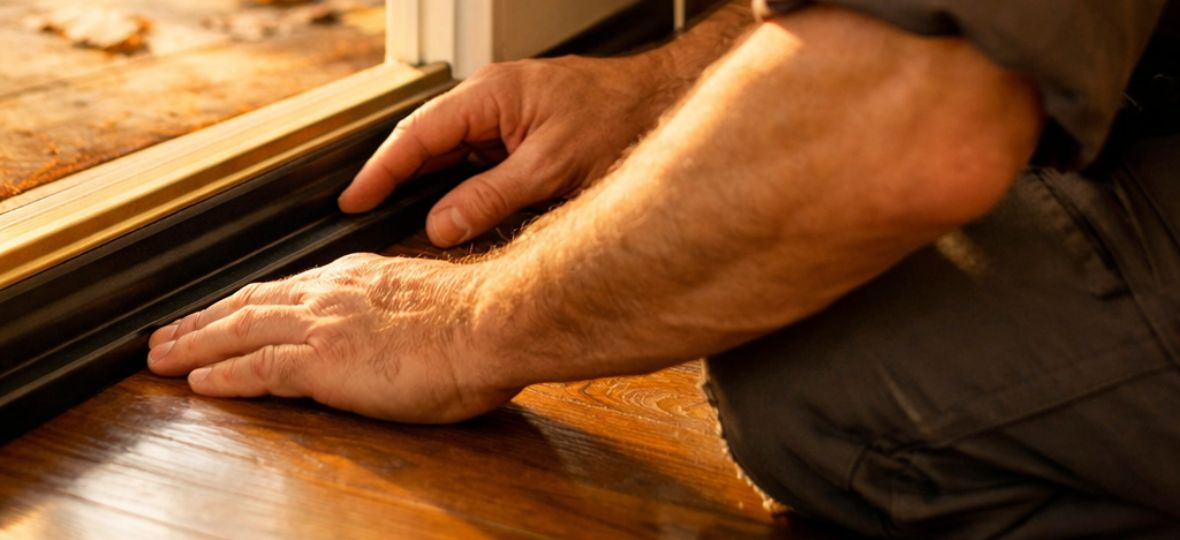
- 10. Exterior door sweeps: Close every exterior door and look at the threshold gap with a flashlight from outside at night. If you see light, the gap is mouse-accessible. Door sweep replacement is a 20-minute job per door with a heavy-gauge steel sweep.
- 11. Garage door threshold seal: The rubber or neoprene seal at the base of the garage door compresses against the concrete apron when the door is closed. Over time, these seals degrade and develop gaps, particularly at the corners. A rodent-resistant threshold seal is available at most home-improvement stores and installs in under an hour.
Attic and Roofline (Items 12–14)
- 12. Tree limb clearance: Walk the perimeter of the house and identify any tree limb that overhangs within 6 feet of any roofline surface — soffit, fascia, gable vent, or roofing material. This is the roof rat access threshold. Limbs within this zone should be trimmed before September to eliminate the aerial highway before move-in season begins.
- 13. Gable vent condition: From the exterior, examine both gable-end vents with binoculars if necessary. Check for torn or missing screening, broken louver slats, or gaps at the vent frame junction with the siding. Any opening larger than 1/2 inch is a roof rat entry.
- 14. Attic inspection: If you have not had an attic inspection in the past two years and live in the Reynolda canopy belt (Reynolda Park, Buena Vista, Mount Tabor, Forest Hills, Old Town, West Highlands), a fall attic inspection is a standard preventive measure. Look for fresh droppings on insulation surfaces, gnaw marks on rafters, and nesting material in insulation corners. If you find any of these, call before October — before an established colony breeds through the winter.
September is the strategic window: Most of this checklist takes an afternoon. The exclusion materials for a typical home — hardware cloth, siliconized caulk, door sweep, vent screen inserts — run $80 to $200 at a home-improvement store. The time and cost of prevention in September is a fraction of the cost of treatment in January. If any of these inspection points reveals evidence of active rodent activity rather than just potential entry points, that is a call situation rather than a DIY afternoon.
Questions About Your Winston-Salem Property?
Free inspection. Written quote. Open 24/7 across Forsyth County.