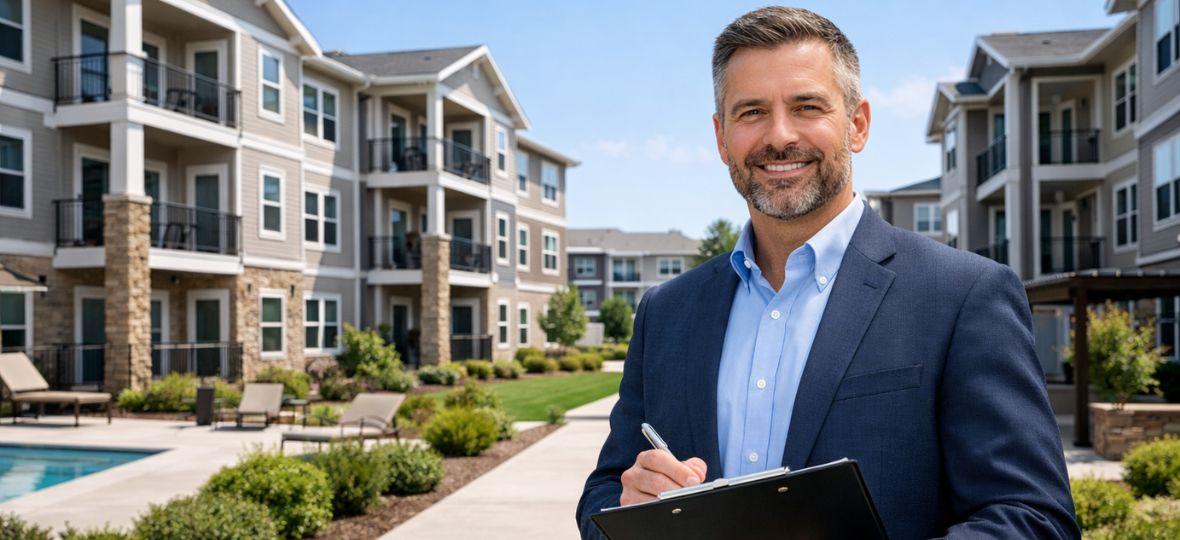
Property managers in Winston-Salem's rental market deal with rodent calls differently than homeowners. A homeowner calls when they find droppings. A property manager fields a tenant complaint, evaluates whether it constitutes a habitability issue under NC landlord-tenant law, arranges access in compliance with notice requirements, coordinates treatment across multiple units, documents the response for owner records, and communicates findings to the tenant in a way that is accurate without creating unnecessary alarm. This is a more complex operational problem than a residential call.
NC Landlord-Tenant Law and Rodent Pest Control
North Carolina's landlord-tenant statute requires landlords to maintain rental property in a fit and habitable condition, which includes reasonable pest control for infestations that substantially affect habitability. Rodent infestations generally qualify — droppings in the kitchen, scratching in wall voids, or live sightings in occupied units are habitability concerns that require a documented response.
For access to occupied units for pest control purposes, NC law requires reasonable advance notice — typically 24 hours except in emergencies. The notice should specify when the technician will arrive and the reason for entry. We coordinate with property managers on the notice format and timing so that tenant communication is handled correctly before we arrive.
The Adjacent-Unit Problem
The most common mistake in multi-unit rodent response is treating only the reported unit. Rodents move between units through shared wall voids, plumbing chases, and HVAC returns. A mouse reported in Unit 3B is almost certainly also active in Units 3A, 3C, and 4B. A treatment program that addresses only the reported unit catches the most visible manifestation of a building-wide problem without addressing the spread.
Our multi-unit protocol: inspect the reported unit plus all adjacent units (two lateral neighbors and the unit directly above and below) before scoping treatment. In a four-unit building with a single complaint, that often means inspecting all four units. In a large complex, it means inspecting the complained unit plus the immediate adjacencies. The broader scope produces an accurate picture of the infestation extent before treatment resources are allocated.
Shared-Space Treatment Priority
In most multi-family properties, the shared spaces — laundry rooms, trash enclosures, utility closets, parking structures, common corridors — are the primary entry and harborage zones that drive infestation into individual units. Treating individual units without addressing these shared sources resolves the visible complaint temporarily but does not address the source. Exterior perimeter bait stations at trash enclosures, laundry room trap programs, and common-corridor exclusion work are the components that have the most impact on building-wide infestation levels.
Documentation for Property Management Purposes
Every service visit on a multi-unit property produces a written service record formatted for property management use. The record includes: units inspected and evidence found by unit, treatment deployed by location, follow-up schedule, and a building-wide summary suitable for owner reporting. This documentation serves three purposes: it demonstrates reasonable habitability maintenance for NC landlord-tenant compliance; it provides an audit trail for insurance purposes; and it gives the property manager an accurate picture of infestation levels across the building over time, which is the basis for making preventive program decisions before complaints arrive.
Building Type and Rodent Profile by Winston-Salem Neighborhood
The rodent profile of a multi-unit property in Winston-Salem is strongly shaped by its location and age. Pre-1970s multi-unit properties in Ardmore, the West End, and Southside face high mouse pressure from construction-era entry-point density and Norway rat pressure from proximity to older sewer infrastructure. Post-1990 properties in Clemmons, Lewisville, and the suburban periphery face primarily seasonal mouse pressure at HVAC penetrations and shared-corridor entry points. Properties in the Reynolda canopy belt neighborhoods — West End apartment buildings, multi-unit conversions in Old Town — can face roof rat pressure in upper-floor and attic-adjacent units in addition to the mouse pressure common throughout Winston-Salem multi-family stock.
Portfolio management: Property management companies with multiple Forsyth County properties can maintain a single-contact relationship for all locations. We maintain records by property address and can provide consolidated portfolio-level reporting on request — useful for owner reporting, insurance renewal, and proactive program planning across a diverse portfolio of buildings with different rodent-pressure profiles.
Questions About Your Winston-Salem Property?
Free inspection. Written quote. Open 24/7 across Forsyth County.